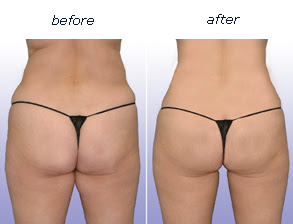
 Initially used only to remove abdominal fat, but now is used in the treatment of other body areas. Many people think of liposuction as a magic bullet for weight loss, even risking their lives to get in inexperienced hands.
If you are considering undergoing liposuction to lay aside the false idea that is indicated for weight loss, reduce the volume of breasts or treat cellulite, it is only useful for modeling the figure. Therefore, only good results with some thin people fat deposits provided they come with a skilled surgeon, and are physically and mentally healthy.
Liposuction involves removing fat deposits in abdomen, hips, buttocks, thighs, knees, arms, neck, chin and cheeks, which can be used when they have exhausted all dietary and exercise routines to reduce these areas.
Then it must be very clear that overweight people are not considered candidates for liposuction, also, who have very flabby tissues should not undergo this process, because it folds unpleasant form in the treated areas.
Anyone wishing to perform liposuction should have a clinical history including details of past illnesses, eating habits and medications you are eating at the time of intervention. They should be considered age, weight and number of pregnancies, and to assess the patient's expectations, which in many cases are exaggerated, so is the duty of the surgeon to make him see that the intervention is not miraculous.
The person who performed liposuction may be subject to the following tests:
Analysis of deformity: study areas easy and difficult to treat.
Quality Test: assesses the state of the skin to know elasticity.
Pinching test: to identify the type of fat that can be soft or hard.
Before the intervention should be marked areas to be treated, indicating greater emphasis on those which most fat removed. Subsequently, a serum is injected to soften the fatty tissue (where fat accumulates) and anesthesia, which may be local or general.
In terms of anesthesia, it is noteworthy that there are three ways to prepare the person to perform liposuction:
Traditional method, in which general anesthesia.
Ultrasonic previously used equipment that emits sound waves to soften the fat.
Tumescent technique, which does not require general anesthesia, only a solution is injected with anesthetic and epinephrine (a substance that reduces bleeding during and after treatment).
Once anesthetized, incisions are made in the skin of 2 to 10 mm to insert them through a thin tube connected to a kind of vacuum that sucks the fat. When the process is placed an elastic band that should be worn for at least a month.
Risks
As with any surgery, always at risk, for example, excessive bleeding, infection, tissue damage or death important. In the case of liposuction can be considered a safe procedure when performed by surgeons who know the technique and comply with the rules of any surgery involving previous laboratory tests, that the intervention is performed in an operating room with the help of an anesthesiologist is Preventive antibiotics and analgesics to relieve pain after surgery.
Bleeding and the risk of anesthesia is less damaging to the patient when applying the tumescent technique, although it can cause toxicity problems due to the administration of local anesthetic and epinephrine. In the case of ultrasound can cause burns, and that general anesthesia should be avoided in patients with heart disease, circulatory or clotting. But do not feel disappointed, because usually complications arise when liposuction is practiced by people unprepared.
Moreover, it is important that you think will appreciate her new figure after 4 or 6 months as the treated areas become inflamed and the space where the fat was delayed briefly closed. Liposuction is definitely a highly effective technique that can provide a new body contour with few scars. The results can be permanent, depending on your eating habits and exercise routine, but if weight gain is likely to be uniformly and in localized areas.
Read more on natural slimming pills and how to lose weight fast. And more about how to prevent cellulite to loose extra fat & be in shape..
Friday, July 22, 2011
Liposuction is Not a Vacuum for cellulite
Friday, June 24, 2011
Battle against Unsightly Cellulite
 Although there are those who think otherwise, you may win the battle against unsightly cellulite or "orange peel" for it is necessary to use discipline, exercise, and good nutrition and, in severe cases, novel techniques act on the skin and under it.
Cellulite is not only an aesthetic problem, but a metabolic disease (related to the changes experienced by substances absorbed by the body) characterized by impairment of fat storing cells, which is swollen due to accumulation of water, fat and toxins under the skin.
The regions most affected are often legs, buttocks, abdomen and arms, which are small growths that increase in size and become more rigid than normal, causing, in turn, circulatory and lymphatic (in those ducts and vessels allow the action of the immune system).
Causes
Unfortunately this is problem that worsens with age, especially if it is a sedentary lifestyle (little exercise) and an unbalanced diet, the decisive factors that trigger or complicate the condition, but there are other issues also play important role in formation of cellulite, including:
Hormone. Production endocrine (hormone) than normal may trigger or worsen the condition. These alterations occur at certain times of the woman's life, such as pregnancy, puberty or menopause. Also, eating products containing hormones, including estrogens (female hormones) of birth control pills often trigger or increase the problem.
Heredity. They have natural predisposition to this disease people whose ancestors suffered it, so in these cases should be monitored food since childhood.
Lack of exercise. A sedentary lifestyle can be one of the causes that pronounced. Exercise, in addition to removing fat, it is good way to stimulate the circulation and improve the utilization of fats. As a complement, it usually is best to apply massage to drain the lymph (colorless fluid containing defense cells called white blood cells) in the affected area.
Stress. The tension in the body may alter the peripheral circulation with subsequent loss of blood supply, thus preventing the disposal of waste materials.
Food. Improper diet rich in calories leads to the appearance of obesity, leading to accumulation of fat that promotes the worsening of the disease, but also very thin women can develop this disease. Furthermore, there is direct relationship between salt intake and cellulite, as this helps the body seasoning to retain fluids, so the low-sodium diet with plenty of water intake helps eliminate cellulite nodules.
Inappropriate dress. Use tight-fitting clothing decreases the blood stream, promoting fluid retention.
Prevention
Cellulite is the condition affecting indiscriminately to all types of women (young or middle-aged, thin or overweight), so fighting it depends on each person.
This only requires discipline and will apply in two basic points:
Watch your diet. To reduce the disturbance, follow a balanced diet. Avoid eating outside the established schedule and limit alcohol, caffeine, and snuff. Also, drink at least eight glasses (2 liters) of water a day.
Do not stay seated. Exercise, even in moderation, will help keep "in line" problem. If you have time to undergo routine gym, walk 20 minutes three times a week.
Read more on natural slimming pills and how to lose weight fast. And more about how to prevent cellulite to loose extra fat & be in shape.


